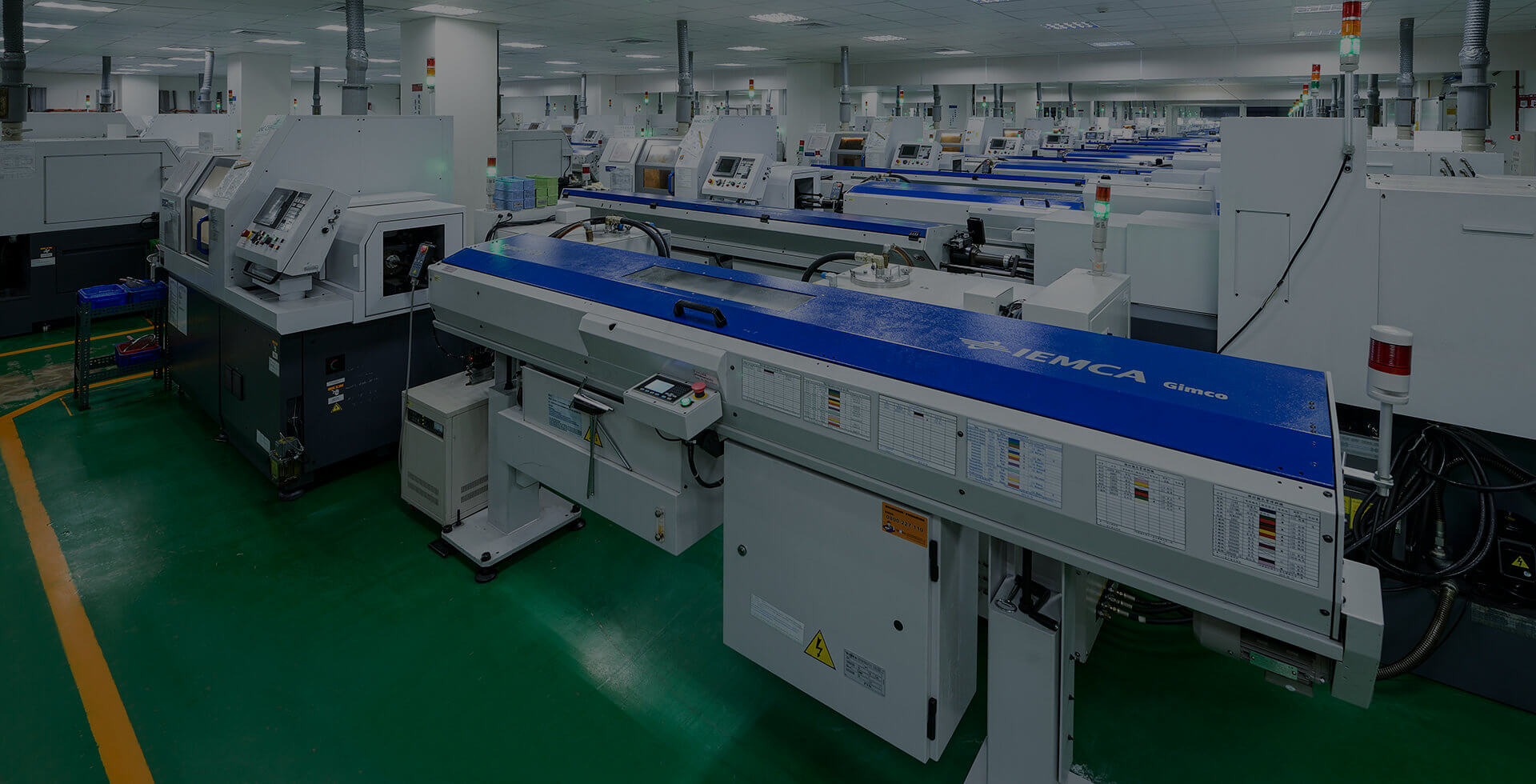
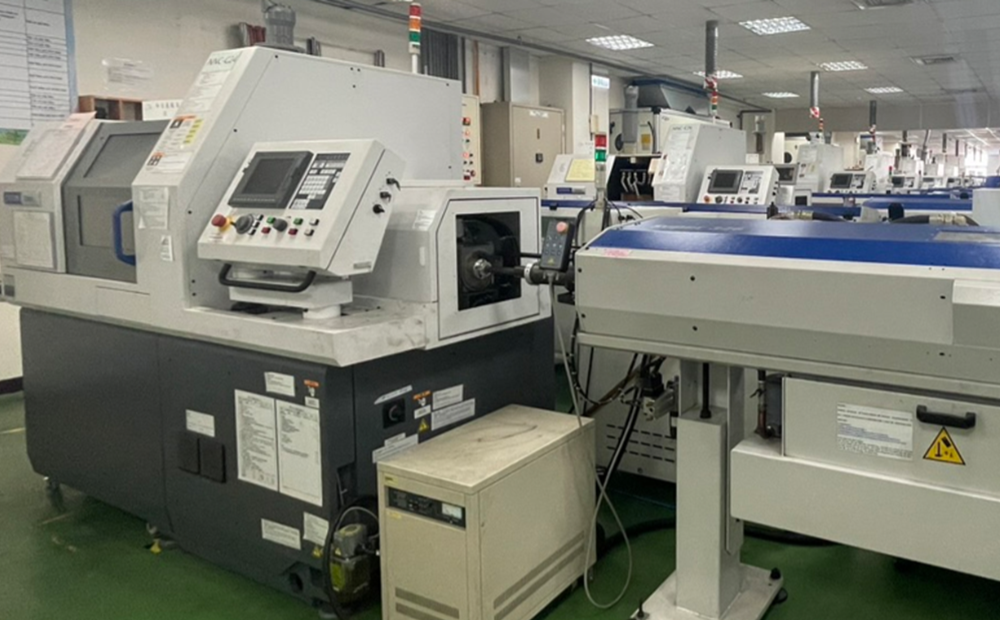
What Is a CNC Lathe?
A CNC lathe, or Computer Numerical Control lathe, is a machine tool that uses computer numerical control technology to operate the machining process. Unlike traditional lathes that require manual control of the cutting tool, CNC lathes automatically control tool movement and machining procedures through pre-written programs. They can perform machining for cylindrical, conical, threaded, grooved and complex profile parts.
During machining, the workpiece is fixed on the spindle chuck and rotates at high speed, while the cutting tool follows the programmed path to remove material. The part is gradually machined into a finished component that meets dimensional and tolerance requirements. Because of their precision, efficiency and consistency, CNC lathes are widely used in automotive parts, machinery equipment, aerospace, medical devices, electronic components and various precision metal machining fields.
How a CNC Lathe Works
The basic concept of CNC lathe machining is to convert part design into a machine-readable program and let the controller automatically execute the cutting process. A general machining workflow can be divided into the following steps:
- Part design: Customers or R&D teams prepare 3D and 2D drawings that define shape, dimensions, material, tolerances and functional requirements.
- Program writing: Software or manual programming is used to write G Code and convert the tool path into CNC-readable instructions.
- Machine setup: Tools are installed, the workpiece is clamped, hardware or fixtures are prepared, and machining origins and process parameters are set.
- Automatic machining: After the program starts, the CNC controller follows instructions to control spindle speed, feed rate and tool movement to complete machining.
- Quality inspection: After machining, measuring tools are used to confirm whether dimensions, tolerances and features meet drawing requirements.
Advantages of CNC Lathes
Compared with traditional lathes, CNC lathes improve stability and efficiency through programmed control. They are especially suitable for parts that require repeated machining and dimensional consistency.
- Precision machining: CNC lathes can meet precision machining requirements based on drawings and process conditions.
- Stable quality: Programmed machining reduces operator variation and improves product consistency.
- Higher production efficiency: Automated machining helps shorten cycle time and improve overall output.
- Suitable for mass production: The same program can be repeatedly used, supporting batch manufacturing and quality management.
- Complex part machining: CNC lathes can perform machining for curved surfaces, threads, grooves and special profiles.
- Reduced labor cost: Under suitable production arrangements, one operator may manage multiple machines to improve overall production efficiency.
Differences Between Traditional Lathes and CNC Lathes
Both traditional lathes and CNC lathes can perform turning operations, but they differ significantly in operation method, machining stability and mass production efficiency.
| Item | Traditional Lathe | CNC Lathe |
|---|---|---|
| Operation method | Manual operation | Computer program control |
| Precision | Depends on operator skill | High precision and stable |
| Production efficiency | Lower | High |
| Mass production | Not suitable | Very suitable |
| Complex machining | Difficult | Easier to complete |
| Consistency | Average | High |
Differences Between Lathes and Milling Machines
Lathes and milling machines are both common metal machining equipment, but their machining principles and suitable part shapes are different.
| Comparison Item | Lathe | Milling Machine |
|---|---|---|
| Machining principle | Workpiece rotates while the tool moves | Tool rotates while the workpiece moves |
| Suitable part shapes | Cylindrical, conical, shaft-type and other rotationally symmetrical parts | Planes, grooves, holes and complex curved surfaces |
| Main cutting tool | Turning tool | Milling cutter |
| Common machining methods | External turning, internal boring, facing, grooving and thread turning | Face milling, side milling, slot milling, drilling and contour machining |
| Workpiece fixing method | Workpiece is clamped on the spindle chuck and rotates | Workpiece is fixed on the worktable |
| Representative products | Shafts, screws, sleeves and rollers | Molds, fixtures, machine bases and brackets |
What Is Tolerance?
In precision machining, tolerance is an important concept. Tolerance refers to the allowable range of variation in the actual size of a part. Even with precise lathes or milling machines, it is not possible to make every part exactly identical. Therefore, engineering drawings define an acceptable dimensional range.
A Simple Example of Tolerance
If a drawing requires a shaft with a design size of 20.00 mm and a tolerance of ±0.02 mm, the allowed size range is 19.98 mm to 20.02 mm. As long as the finished part falls within this range, it meets the dimensional requirement.
Why Is Tolerance Needed?
The purpose of tolerance is to ensure that parts can be assembled and function properly after manufacturing. For example, when a shaft must fit into a hole:
- If the shaft is too large, it may not fit.
- If the shaft is too small, it may become loose or unstable.
- Only when the size falls within a reasonable range can the part maintain proper fit and function.
Designers determine whether tolerance should be wider or tighter according to the part's function. A smaller tolerance usually means higher dimensional accuracy requirements, which may require more precise machines, tools and measuring equipment. This can increase machining time and cost.
The Relationship Between Tolerance and Process Capability
Tolerance and machining process capability are closely related. Together, they determine whether a product can consistently meet design requirements. If the required tolerance exceeds the actual process capability, it may lead to higher defect rates, longer machining time, higher cost, faster tool wear, increased inspection cost and lower production efficiency.
Therefore, designers should avoid setting unnecessarily tight tolerances beyond actual functional needs. Designers usually define tolerances based on functional requirements, while manufacturing teams evaluate whether the existing process can achieve them consistently. Ideally, process capability should reliably meet tolerance requirements, allowing the product to balance quality, efficiency and cost.
Differences Between Prototyping and Mass Production
In product development, prototyping and mass production are two different manufacturing stages. Although both follow design drawings and specifications, they differ in purpose, process conditions, quality requirements and management methods.
1. Different Purposes
The main purpose of prototyping is to confirm whether the product design is feasible, including appearance, function, assembly method, material selection and machining method. This stage focuses on quick verification and problem discovery, and multiple design modifications may be allowed.
Mass production takes place after design confirmation. Its goal is to produce parts that meet specifications in a stable, efficient and cost-controlled way. This stage focuses on process stability, production efficiency and quality consistency.
2. Different Process Conditions
Prototyping often uses more flexible process methods, such as general-purpose equipment or machining parameter adjustments according to on-site conditions. Technicians may also make immediate corrections when problems are found. Because the quantity is small, process variation can often be controlled manually.
Mass production requires standardized processes, such as fixed equipment and fixtures, standard machining parameters, operation procedures and inspection standards. Operator variation must also be controlled. Mass production requires consistent quality during long-term and large-batch manufacturing.
3. Different Quality Management Methods
The prototyping stage mainly checks whether the design is correct, dimensions meet requirements, functions are achieved and assembly is smooth. It focuses on finding problems. The mass production stage focuses on process stability, defect control, batch consistency, supply chain stability and quality traceability. It focuses on preventing problems from recurring.
FAQ
Q1: What parts are suitable for CNC lathe machining?
CNC lathes are suitable for cylindrical, conical, shaft-type, sleeve, threaded, grooved and rotationally symmetrical parts commonly used in machinery, electronics, automotive and precision metal component applications.
Q2: What is the biggest difference between a CNC lathe and a milling machine?
A lathe mainly rotates the workpiece while the tool moves, making it suitable for rotationally symmetrical parts. A milling machine rotates the cutting tool while the workpiece moves, making it suitable for planes, grooves, holes and complex surfaces.
Q3: Why does a smaller tolerance usually increase cost?
A smaller tolerance means less allowable dimensional variation. It usually requires a more stable process, more precise tools and measurement, as well as more machining and inspection time, which may increase cost.
Q4: Can mass production start immediately after prototype approval?
Prototype approval means the design and function have been initially confirmed, but stable processes, inspection standards, fixtures and quality management methods are still needed before mass production to ensure batch consistency.
Conclusion
CNC lathes are important manufacturing equipment in modern precision machining. Through programmed control, they improve machining efficiency, dimensional stability and product consistency. For shafts, sleeves, threaded parts, fittings and various rotationally symmetrical metal components, understanding CNC lathe principles, tolerance concepts and the differences between prototyping and mass production helps reduce machining risks at the early design stage.
If you are evaluating CNC lathe machining, turning and milling prototypes or future production needs, it is recommended to confirm material, tolerance, surface treatment, inspection datum and process capability during the drawing stage, so that the product can balance quality, efficiency and cost.
Contact us to learn more about our turning and milling services